
![Chariots Of Fire Revisited [Running With Synthesizers]](https://www.staging.thestorydepartment.com/wp-content/uploads/2016/09/chariots-narrow2-1.jpg)
In Writing Screenplays that Sell, Michael Hauge singles out Chariots Of Fire (1981) as a cinematic outlier. It was an unlikely movie to generate big box office. Why? It is a biographical period piece, lacks high concept, and is set outside the US.
Chariots of Fire was hugely successful, though. It ended up making nearly $60 million at the US box office alone. It also won four Academy Awards, one for its original score.
I remember enjoying the movie, and as a fan of the early music of Vangelis (who also scored Blade Runner), I was curious to see if and how 25 years later the film would hold up.
Minimal Appeal
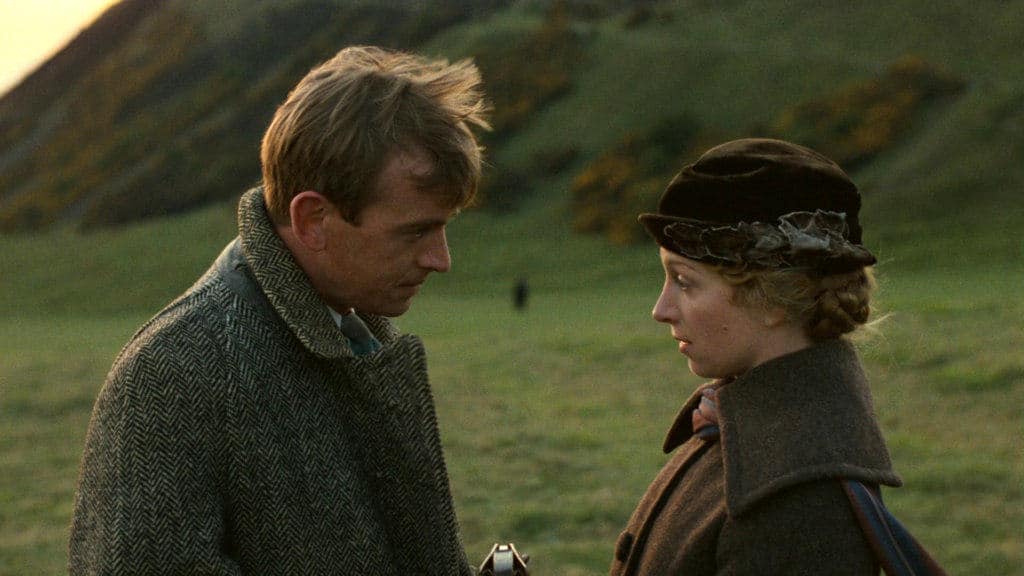 I put Chariots Of Fire on my watch list, but didn’t get around to buying the BluRay until its 30th anniversary. It took another five years before I actually watched it.
Do you have that, too? Some films you really want to see, yet you never end up being in the right mood. Perhaps because of all the reasons Michael Hauge gave when he labeled the movie a fluke.
This so-called logline in IMDb doesn’t help, either: “Two British track athletes, one a determined Jew and the other a devout Christian, compete in the 1924 Olympics.”
Whoever wrote it, must have missed an act or two. The first half of the story takes place in Cambridge from 1919, and shows Jewish student Harold Abrahams’ determination to counter the prevailing anti-Semitism, by proving he is the university’s best runner:
“I’m gonna take them on, all of them, one by one, and run them off their feet.”
Director Without A Clue?
The movie still works, mostly because of the sheer obsession of its main players. And running is in a way very cinematic. (Tom Cruise has known this all along) But what is it about?
Tom Stemple wrote an amusing piece about two video interviews, one with writer Colin Welland, and the other with director Hugh Hudson. After he listened to Welland, he concluded: “Religion is the main theme of the film. Then I turned over the tape and listened to Hudson. He talked at great length about the mechanics of shooting the film. It became clear from how he talked that he did not have a clue what the movie was about.”
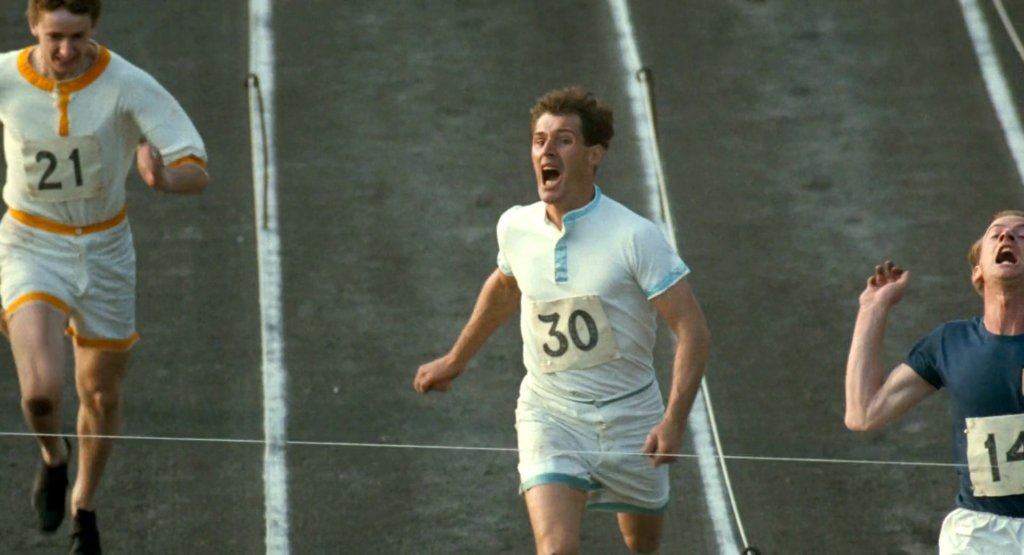 Really? It’s not that hard to see what this is about. As the act one curtain falls, in a textbook declaration of the hero’s objective – the ‘Outer Journey’ if you wish – Abrahams vows to “run them off their feet.” It is a fairly open goal, but in good tradition, the mid point will specify it further as ‘winning at the Olympics’.
The theme is clarified in the movie moment that I will show you below. While adversary Liddell runs because he finds his inspiration within, in his faith (“when I run, I feel His pleasure”), for Abrahams the motivation lies external. It is all about how others perceive him. His faith defines him negatively. He wants to fight prejudice by proving himself worthy, through running – to an Oscar®-score.
Oscar To The Greek
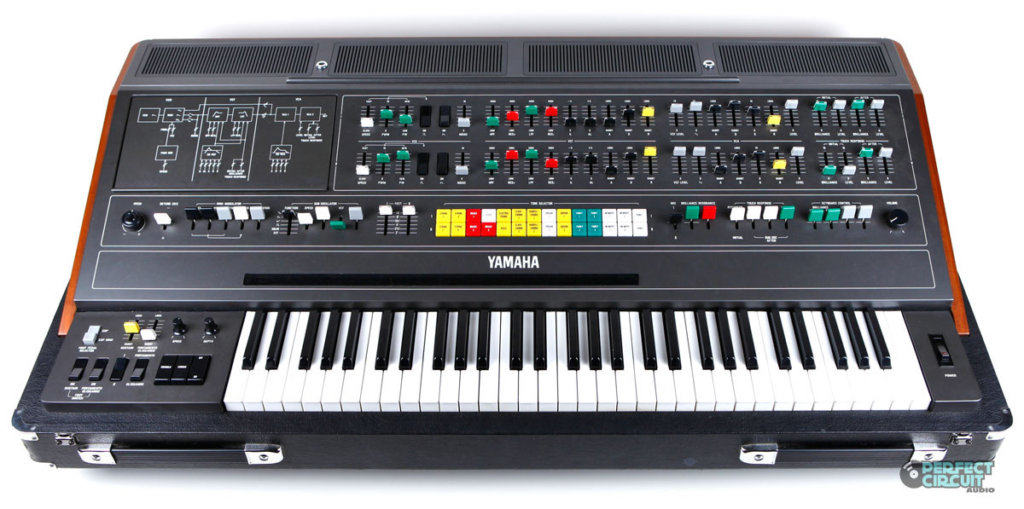 Synthetic soundtracks usually don’t age very well, and their composers rarely achieve more than cult status, e.g. Carpenter, Moroder, Wendy Carlos (for Kubrick), Tangerine Dream (for Michael Mann) and Vangelis. But did you know that Hans Zimmer’s early scores were largely synthesizer-based?
Nothing is more subjective than music, and I was expecting for Chariots Of Fire’s Oscar-winning score to be quite dated.
At the opening credit, my fear was confirmed.
As we see the Cambridge men running on the beach in slow motion, over Vangelis’ main theme, I cringe. The tune has been played to death, to a point that it distracts.
Director Hugh Hudson made a beginner’s mistake: images and music never carry any intrinsic cinematic emotion. Unless an emotion is set up through a character’s experience, the moment is shallow. To the mainstream audience at the time, this music cue appealed as a catchy tune, rather than an effective movie score. A lubricant into the actual movie. Thirty-five years on, it no longer works (to me).
Ars Electronica
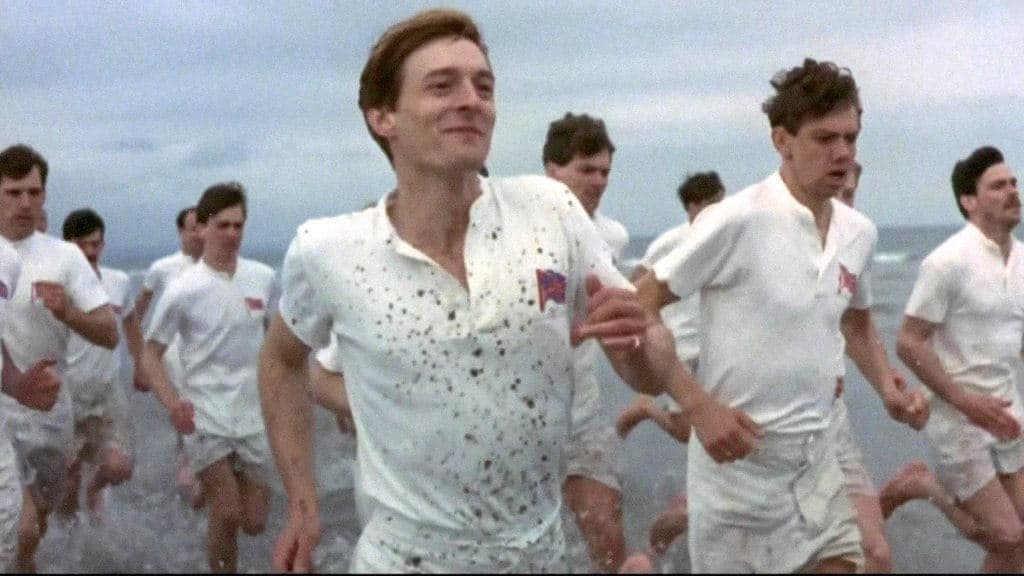 That opening image with the famous tune may be what most punters remember about the movie, but it’s also devoid of emotion. We don’t know these guys yet. Pretty pictures, but we don’t really care.
To my surprise however, the rest of the score holds up fairly well, and one scene in particular jumps out.
There is a moment twenty minutes into act two that really works in terms of emotional – and musical – payoff.
Chariots Of Fire – Movie Moment
Abrahams and Liddell meet for the first time in London in June 1923, when they race against each other in a British open. Liddell beats Abrahams, who takes it extremely badly.
Over the rhythmic clapping of the grandstand seats, sharp electronic shards from the legendary Yamaha CS80 synthesizer emphasise our Hero’s pain, alternating with more subtle filtered ‘pads’.
In that moment, Sybil appears, to comfort her lover. Now we see what our Hero’s real problem is: “I don’t run to take beatings. If I can’t win, I won’t run.” She realises it is all about his ego, and this is exactly what he needs to resolve before the movie is over.
“Ring me when you’ve sorted that one out. Try growing up.”
-Karel Segers
https://ozzywood.wistia.com/medias/z8ch7weusb?embedType=iframe&seo=false&videoFoam=true&videoWidth=1080