
During one of my Hero’s Journey classes a student asked if an archetype can be replaced, for instance by a series of events. Very good question.
And yes, of course it’s possible.
But… Why would you? If it ain’t broke, don’t fix it.
The whole idea behind The Hero’s Journey and the insight that most successful stories employ archetypical characters is exactly that: we use the metaphor.
Archetypes are used to get a point across simply, without having to create complicated, realistic situations, so you can focus on what is really important in the story: the main character’s problems and actions, the hero’s journey of change.
Life often lacks archetypes?

In life, stuff is random and we need to analyze and interpret all these events to find meaning in it. If you believe your story is helped by this and you find a fascinating way to emulate reality while still entertain your audience, you have to follow that instinct.
However, in stories usually meaning is highlighted, enlivened and inspired by living characters, so we can focus on what they have to tell us rather than waste time on cracking the code of randomness.
Take the Mentor character. In life, we learn from everything and everyone, every day. Say, someone asks you: “How did you learn to become such a great proof reader?” The answer is probably a combination of sources. But if you want to maintain this level of realism in your stories and explain the detail in order to stick to the truth, your audience will fall like flies.
The Hero Without A Mentor
If in a story a character needs to learn something, the point of the scene is hardly ever really about the teacher character but rather about the actual lesson learned. So the teacher will be a simple, recognizable mentor character.
This doesn’t mean that every successful movie needs a Gandalf, a Merlin or a Dumbledore.
Take for instance Die Hard.

Although Die Hard follows a pretty straightforward Inner and Outer Journey, the first act does not have a clear Mentor character. When John McClane runs up the stairs of the Nakatomi tower to a higher floor to take stock of the situation and he says ‘think, think’, who/what is he consulting? There’s no-one around to tell him what to do. No grey-bearded man in sight.
Not every story needs a Gandalf, a Merlin or a Dumbledore.
He’s effectively consulting his memory, all the stuff he learned at the NY Police Academy. Then he decides to try and get support. So here, the archetype of the Mentor is replaced by McClane’s training as a cop. This is in essence what the student in my class meant: just like in real life, the wisdom the Hero accesses in the moment of decision is not always presented in the shape of an archetypal character.
This is not a mythical way of resolving the situation but it worked fine for Die Hard.
But if you want to make your story mythical and your characters memorable, why not use the power of archetypes? Ask yourself: is replacing the archetypal function going to make your story stronger? If so, by all means go ahead.
Any thoughts or examples from your own stories?
– Karel Segers
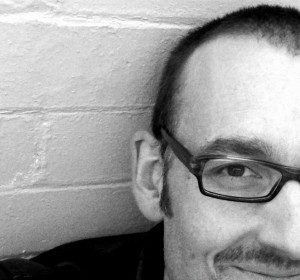 Karel Segers is a producer and script consultant who started in movies as a rights buyer for Europe’s largest pay TV group Canal+. Back then it was handy to speak 5 languages. Less so today in Australia.
Karel teaches, consults and lectures on screenwriting and the principles of storytelling to his 5-year old son Baxter and anyone who listens.
He is also the boss of this blog.